We’ve all got that one corner of the closet. You know the one: stacked with stiff, scratchy, boxy t-shirts. They get worn exactly once—usually when you’re helping a friend move furniture in July or painting a hallway—and then they get permanently demoted to mowing the lawn. Six months later, they’re cut into squares and sitting in a bucket in the garage as oil rags. That sounds funny until you realize someone spent $10,000 to $30,000 of their annual marketing budget to put those shirts in people's hands. When business owners and brand directors invest in custom merchandise—whether it's for their team, a company collection drop, client appreciation packages, or retail pop-ups—they think they’re buying walking billboards. But here is the brutal reality of commercial apparel: every piece of clothing has to win a vote every single morning. When someone opens their dresser drawer, your shirt is competing against their favorite vintage tee, their softest heavyweight hoodie, and their go-to weekend wear. If the fabric feels like cardboard and the print feels like a rubber dinner plate glued to their chest, it loses that vote every single time. And in commercial apparel, there are no run-off elections.
You've found an entry in our Branding Notes series. Consider this our studio scratchpad: raw thoughts on brand identity, creative direction, and visual craft. It's not a showroom of our studio's visual standards—it's just honest talk. For our finished craft, case studies, and client work:Step Inside Spraycan Creative
What Kills Commercial Merch (and the Rules That Save It)
Great apparel doesn't happen by accident. Most promotional merchandise fails not because the company’s logo is bad, but because the order was treated like a commodity catalog checkbox. If you want people to actually wear your gear, you have to engineer for three non-negotiable variables: 1. The Fabric and the Hand-Feel: The second someone touches a garment, their subconscious makes a decision. If you buy the cheapest open-end carded cotton blanks from a promo supplier, the shirt feels rough and shrinks two sizes in the wash. High-retention apparel starts with combed ring-spun cotton, premium French terry, or heavyweight fleece with a tailored modern cut. You want the kind of fabric someone reaches for on a casual Saturday morning. 2. Ink Chemistry and Print Physics: The biggest mistake in corporate merch is running a massive 12-color plastisol print straight across the front of a lightweight shirt. Plastisol ink sits on top of the fibers like a sheet of vinyl, creating an unbreathable “sweat shield” that cracks and peels after three dryer cycles. High-end merchandise relies on water-based discharge inks that dye the cotton fibers directly, soft-hand plastisol, or subtle tonal embroidery that moves with the garment naturally. 3. Nobody Wakes Up Wanting to Be a Corporate Billboard: Your employees and customers love your company, but they don't want a giant 14-inch corporate website URL and telephone number stamped across their back. If you want apparel to live outside the office, the design has to mirror the culture and aesthetic of what people already choose to wear. That means small left-chest marks, custom hem tags, tonal sleeve prints, or hand-drawn heritage illustrations that feel like curated streetwear rather than a walking trade show badge.
Merch in the Wild: From Rural Utility Linemen to the Red Bull Arena
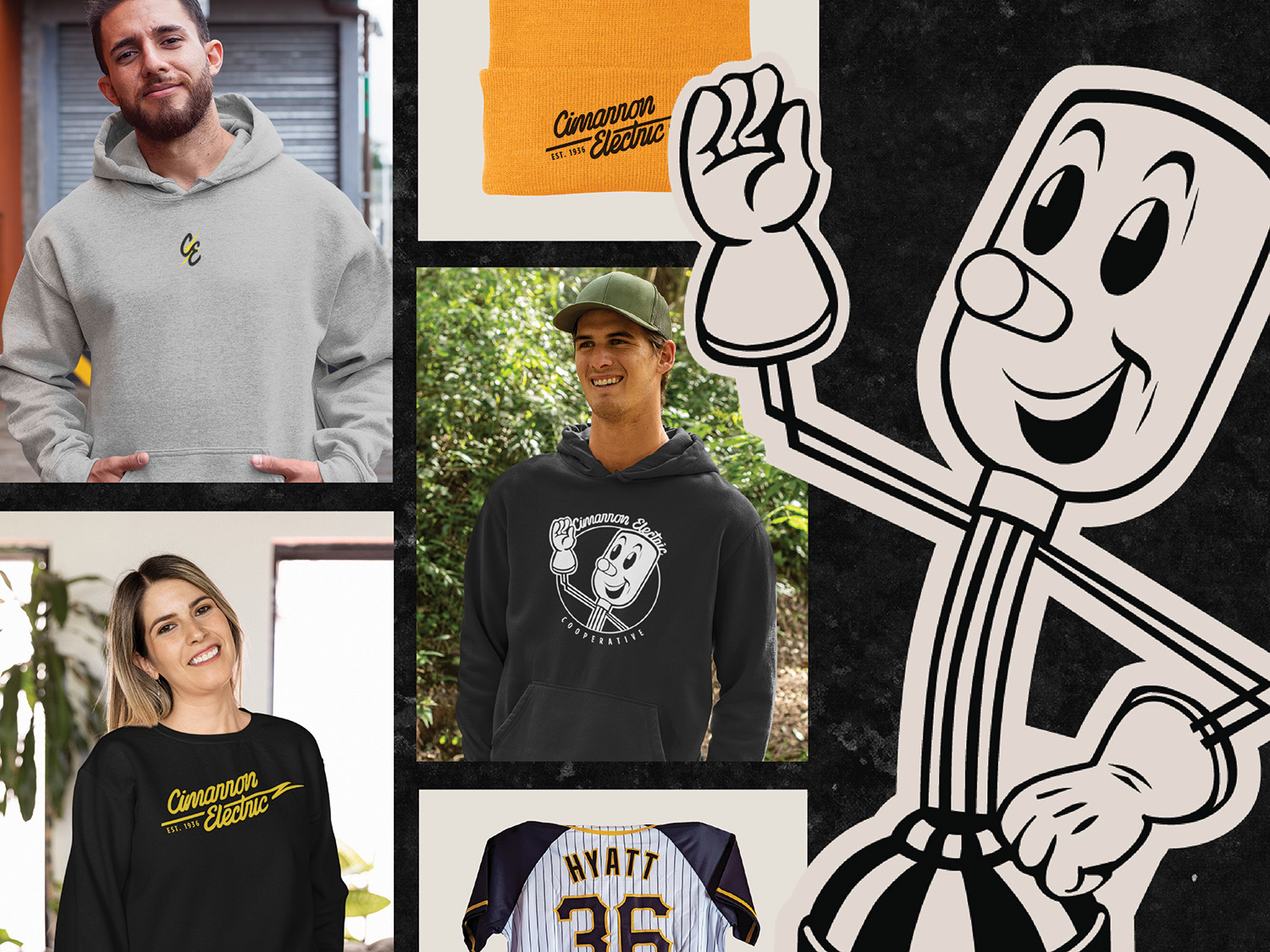
We don't treat apparel as a catalog print order; we treat it as tactile brand equity you can hold in your hands. When our team built the staff and member apparel line for Cimarron Electric Cooperative, their crew didn't want stiff, corporate polos. They wanted an authentic vintage aesthetic that honored the grit and history of rural electric service without feeling dusty.
We developed custom hand-lettered scripts, embroidered Carhartt-grade outerwear, and tailored baseball jerseys featuring a revitalized heritage mascot. The result? Their linemen and office staff didn't just wear the gear on the clock—they threw it on after hours, and members actively asked how they could buy the collection for themselves.
The exact same standard applied when our athletic apparel brand, Fatcap, partnered with Red Bull for their national Campus Clutch collegiate esports tournament. When collegiate athletes compete under arena lights on national broadcasts, you cannot hand them generic catalog poly-blends. We engineered custom jerseys with bespoke typefaces, and moisture-wicking athletic cuts from the ground up.
Custom merchandise is one of the rare times your brand leaves your building and walks out into the physical world. If you wouldn't cut corners on your physical storefront or customer experience, don't cut corners on the gear you put in people's hands.